The Kurukshetra War: Day 18
The story
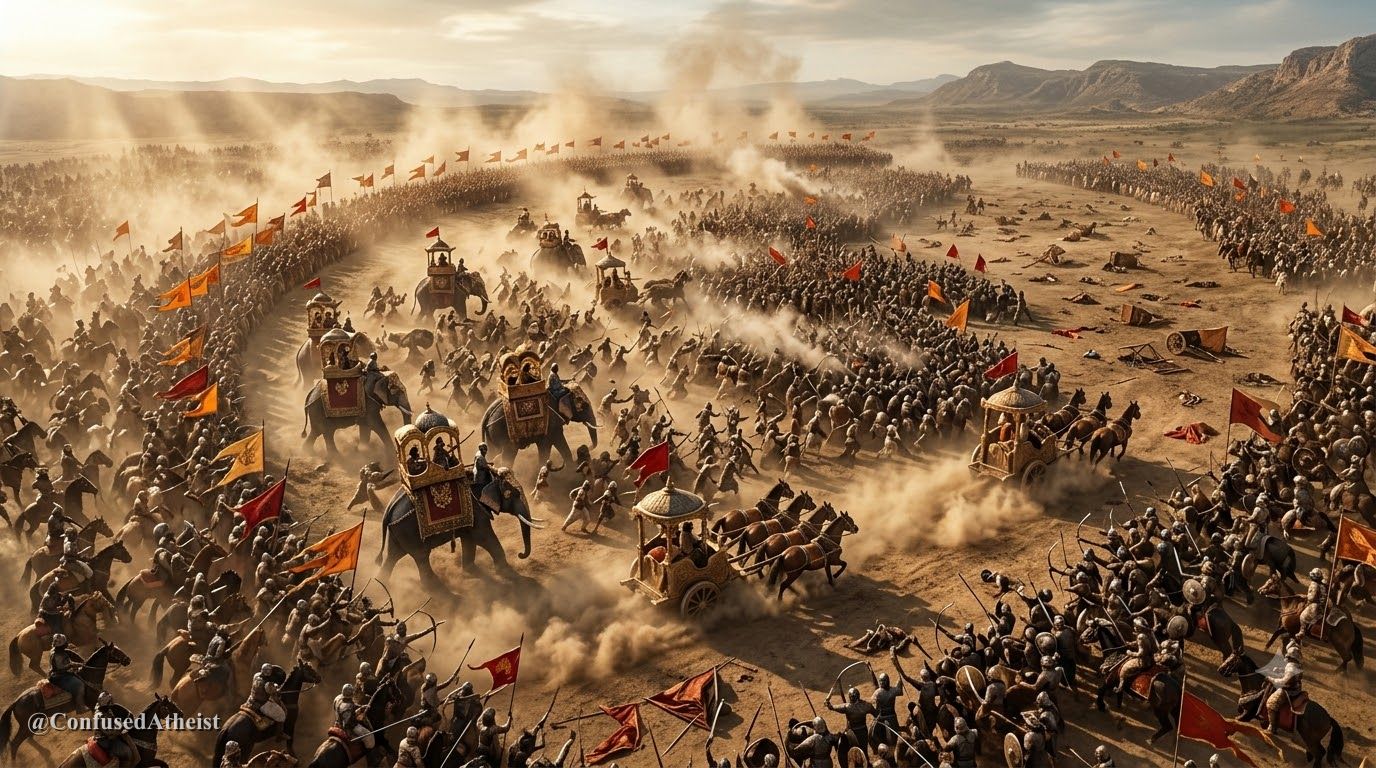
By the eighteenth morning, the once-mighty Kaurava host had been reduced to a remnant. King Shalya took command of the remaining forces and was slain by Yudhishthira in direct spear combat. Sahadeva hunted down and executed Shakuni, avenging the fraudulent dice game that had initiated the catastrophe eighteen years before.
Realizing all was lost, Duryodhana fled the field alone and hid within the depths of the Dwaipayana lake, using ancient yogic techniques to solidify the water around him.
The Pandavas tracked him to the lake and challenged his courage. Yudhishthira made a remarkably perilous offer: Duryodhana could choose any of the Pandava brothers for a duel with any weapon of his liking; if Duryodhana won, the entire kingdom would be his.
The Mace Duel and the Night Raid
Duryodhana chose Bhima and selected the mace (Gada). The duel between the two titans was brutal and evenly matched. Duryodhana's superior footwork and defensive technique began to wear Bhima down.
Recognizing the danger, Krishna signaled to Bhima by tapping his own left thigh. This reminded Bhima of his ancient vow to break Duryodhana's thighs for humiliating Draupadi. In a controversial move that violated the strict rules of mace warfare (which forbade striking below the navel), Bhima swung his mace and shattered Duryodhana's thighs, bringing the Kuru king crashing to the ground.
As Duryodhana lay mortally wounded, Ashwatthama, Kripa, and Kritavarma visited him. Duryodhana anointed Ashwatthama as the final commander. That night, consumed by vengeance and grief, Ashwatthama launched the infamous nocturnal raid on the sleeping Pandava encampment (Sauptika Parva).
In the dead of night, Ashwatthama slaughtered Dhrishtadyumna, Shikhandi, and all five young sons of Draupadi (Upapandavas) in their tents. He returned to the dying Duryodhana to report the deed, allowing the king to breathe his last believing the Pandava lineage was extinguished.
What we still don't know
The eighteenth day leaves no room for triumphalism. The war ends not in glorious victory, but in an ash heap of dead sons and broken rules. The epic concludes that total victory in war is indistinguishable from total defeat.
Sources
- Ganguli, K. M. (1883-1896). The Mahabharata of Krishna-Dwaipayana Vyasa (Shalya Parva & Sauptika Parva).