The Kurukshetra War: Day 16
The story
Following the demise of Drona, the leadership of the Kaurava army passed to Karna, King of Anga. For years, Karna had waited for this opportunity to demonstrate his martial supremacy over Arjuna and validate the honor given to him by Duryodhana.
Karna arrayed his surviving divisions in the Makara Vyuha, while the Pandavas responded with the Ardhachandra Vyuha (Crescent formation). The day saw intense duels across every quarter. Karna fought with ferocious skill, subduing Nakula and Sahadeva in personal combat. Yet, true to his secret vow given to Queen Kunti, he spared their lives, reminding them that his duel was with Arjuna alone.
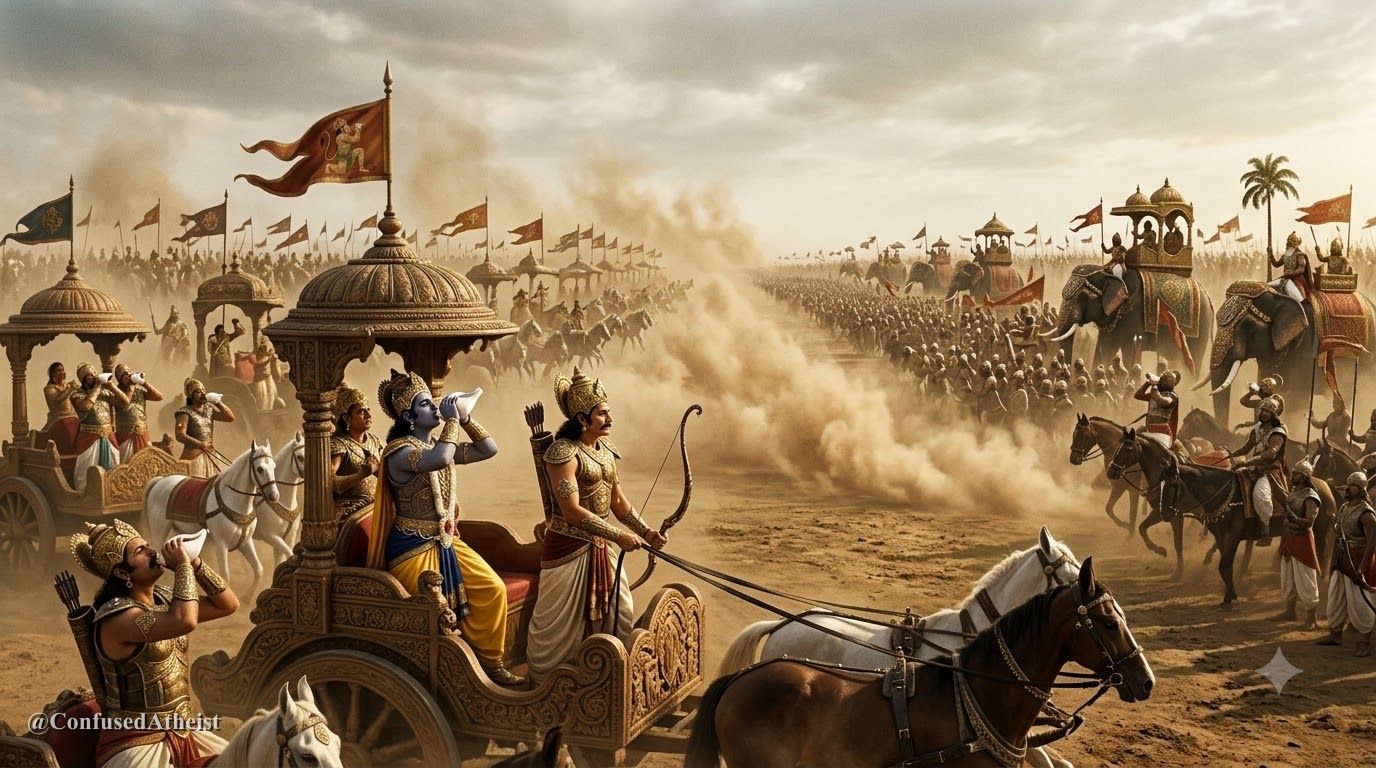
The Fulfillment of Bhima's Vow
The central event of the sixteenth day was the catastrophic clash between Bhima and Dusshasana. Fourteen years prior, during the disastrous game of dice, Dusshasana had dragged Draupadi into the royal assembly by her hair and attempted to strip her bare before the court. At that terrible moment, Bhima had sworn a terrifying oath: he would tear open Dusshasana's chest on the battlefield and drink his heart's blood.
On this day, their chariots met. After shattering Dusshasana's weapons and destroying his chariot, Bhima wrestled him to the ground. In a scene that horrified onlookers on both sides, Bhima fulfilled every word of his ancient vow, ripping open his adversary's chest and smearing Draupadi's promised retribution across the battlefield.
The spectacle struck such deep terror into the Kaurava ranks that entire divisions broke formation and fled in disarray, leaving the army fractured as dusk ended the sixteenth day.
What we still don't know
The brutality of Dusshasana's death is unsparingly depicted. Far from romanticizing heroic justice, the epic presents revenge in its most visceral, repellent reality, showing how vengeance dehumanizes both perpetrator and victim.
Sources
- Ganguli, K. M. (1883-1896). The Mahabharata of Krishna-Dwaipayana Vyasa (Karna Parva).
Evidence Labels
More like this
The Kurukshetra War: Day 15
'Ashwatthama is dead.' The moral collapse of Yudhishthira and the fall of Preceptor Drona.
The Kurukshetra War: Day 17
The fateful duel between Karna and Arjuna. The sunken chariot wheel and the death of the tragic warrior.