The Kurukshetra War: Day 12
The story
Frustrated by the failure to capture Yudhishthira on Day 11, Duryodhana and Drona devised a coordinated scheme. To ensure Arjuna could not intervene, King Susharma of Trigarta and his brothers formed the Samsaptakas—an elite suicidal cohort sworn by solemn oath either to slay Arjuna or perish on the field.
The Samsaptakas challenged Arjuna to combat on the southern flank of Kurukshetra. Bound by the martial code that forbade refusing a challenge, Arjuna was forced to march away, leaving Yudhishthira protected by Satyaki, Bhima, and Dhrishtadyumna.
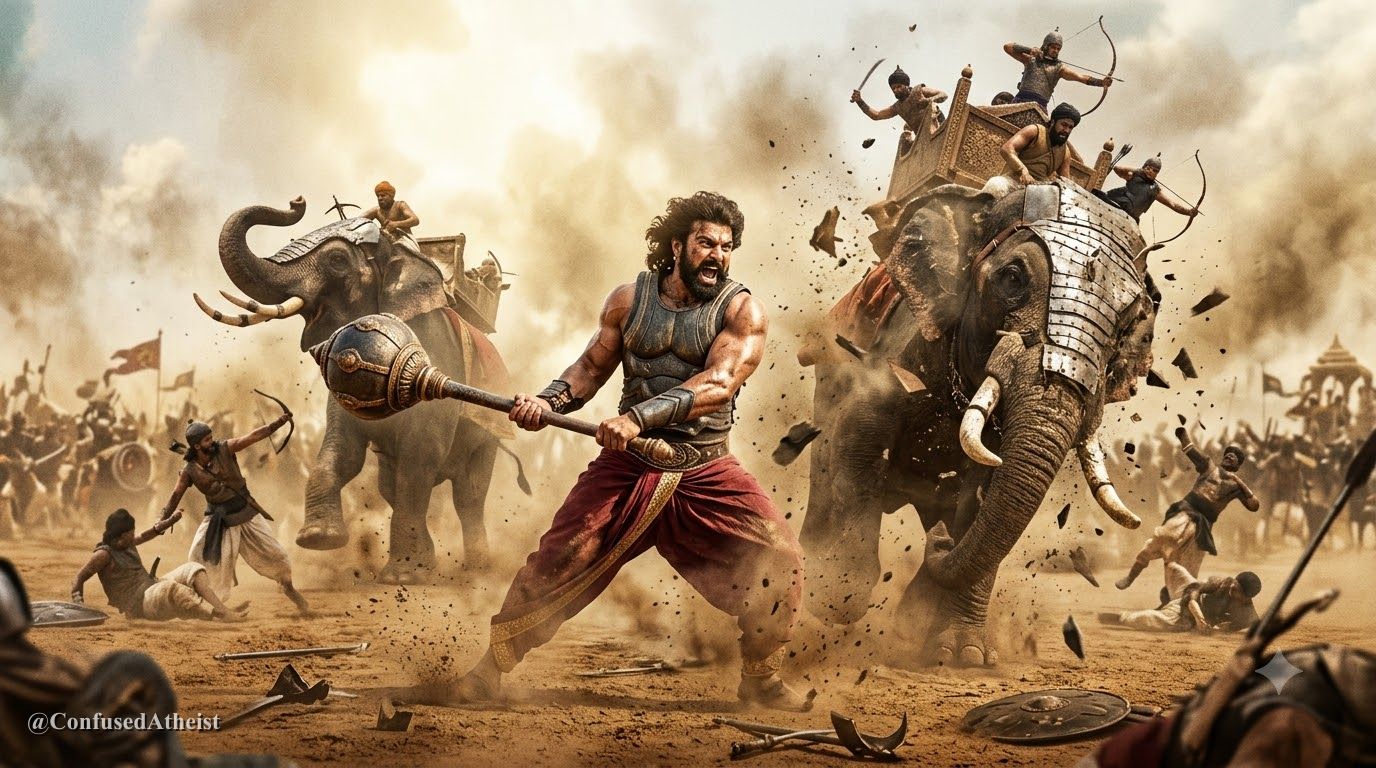
Supratika and the Vaishnavastra
With Arjuna occupied, Drona assaulted the center. The most terrifying onslaught came from the elderly King Bhagadatta of Pragjyotisha (ancient Assam), riding his legendary war elephant Supratika. Bhagadatta's elephant force trampled the Pandava infantry, threw cavalry formations into chaos, and repeatedly drove back Bhima.
Noticing the impending rout, Arjuna fought his way through the Samsaptakas and rushed to confront Bhagadatta. In a moment of desperation, Bhagadatta consecrated his goad with ancient mantras and hurled the irresistible Vaishnavastra at Arjuna.
Before the celestial weapon could strike, Krishna stood up on the chariot floor and received the missile upon his bare chest. Rather than piercing him, the celestial energy transformed into a radiant garland of forest flowers (Vanamala). Krishna explained that the Vaishnavastra belonged originally to Vishnu, and therefore returned harmlessly to its source. With the divine weapon nullified, Arjuna swiftly brought down Supratika and Bhagadatta.
What we still don't know
Bhagadatta's deployment of massive elephant warfare illustrates the diverse geopolitical alliances depicted in the epic. Modern scholars often note that ancient northeastern kingdoms were renowned for specialized elephant tactical warfare, reflecting authentic regional military traditions woven into the narrative.
Sources
- Ganguli, K. M. (1883-1896). The Mahabharata of Krishna-Dwaipayana Vyasa (Drona Parva, Samsaptakabadha Parva).
Evidence Labels
More like this
The Kurukshetra War: Day 11
Dronacharya assumes supreme command of the Kaurava army. Duryodhana schemes to capture Yudhishthira alive.
The Kurukshetra War: Day 13
The tragedy of the Chakravyuha. Sixteen-year-old Abhimanyu breaches the spiral maze, fighting to the last breath.