The Kurukshetra War: Day 11
The story
Following the fall of Bhishma on the tenth evening, the Kaurava camp was plunged into deep grief. With their venerable patriarch incapacitated upon a bed of arrows, Duryodhana turned to Dronacharya—the revered master of military science—to assume supreme command of the army.
Drona accepted the leadership, but Duryodhana brought forward a shrewd tactical request: rather than killing Yudhishthira, Drona was urged to capture the eldest Pandava alive. Duryodhana reasoned that killing Yudhishthira would only provoke the remaining Pandavas to an uncontrollable, vengeful frenzy. If captured alive, Yudhishthira could be compelled into another rigged game of dice and dispatched once more into exile, securing the kingdom legally without lingering guilt.
The Sakata Vyuha and the Trap
Drona readily agreed to Duryodhana's request, but laid down an absolute condition: he could capture Yudhishthira only if Arjuna was drawn far away from his brother's side. As long as Arjuna guarded Yudhishthira, the master admitted that no power on earth could breach the Pandava defenses.
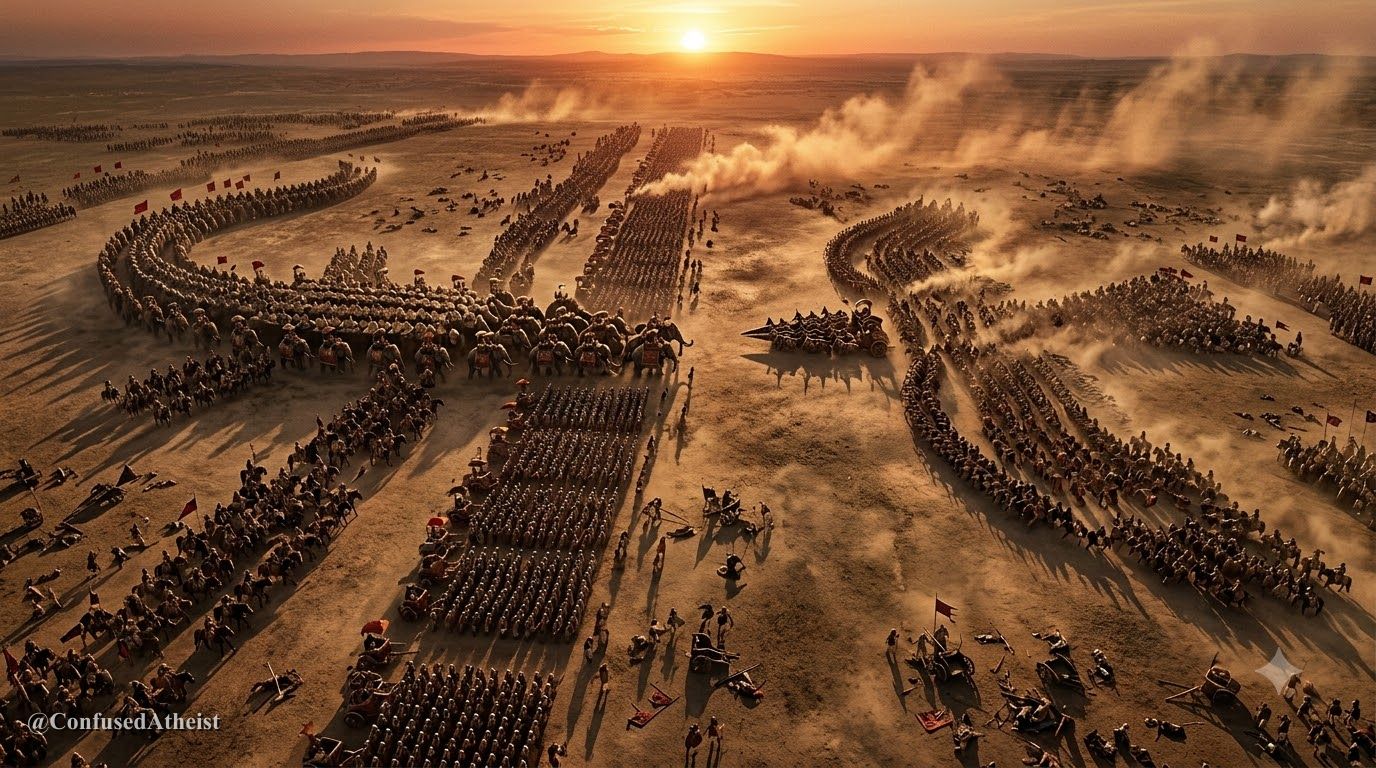
On the morning of the eleventh day, Drona deployed the Kaurava host in the Sakata Vyuha (Cart formation), pressing relentlessly toward Yudhishthira's position. Dhrishtadyumna countered with the Krauncha formation. Drona swept across the battlefield with astonishing precision, shattering defensive lines and coming within striking distance of Yudhishthira's chariot. Just as capture seemed imminent, Arjuna arrived with the Gandiva bow ablaze, unleashing volleys that checked Drona's advance until sunset forced an end to the day's combat.
What we still don't know
The eleventh day highlights the legalistic psychology governing ancient conflict. The epic suggests that even in total war, dynastic legitimacy and formal codes held immense sway: Duryodhana understood that an assassinated king produced martyrs, while an exiled debtor preserved political stability.
Sources
- Ganguli, K. M. (1883-1896). The Mahabharata of Krishna-Dwaipayana Vyasa (Drona Parva, Dronabhisheka Parva).