The Kurukshetra War: Day 7
The story
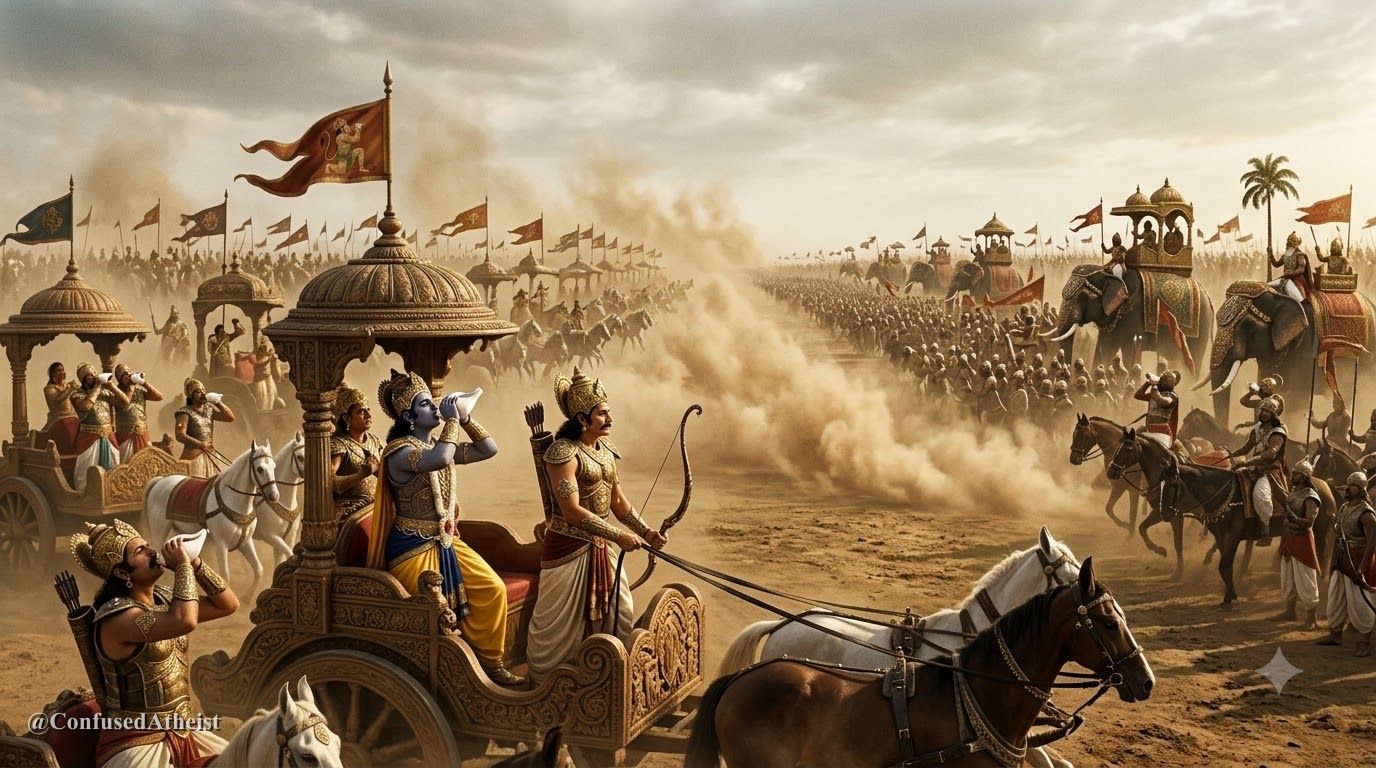
The seventh day saw Bhishma arrange the Kaurava forces in the intricate Mandala Vyuh (Circular formation), an offensive and defensive shape designed to protect the core commanders while presenting a unified front. The Pandavas countered with the Vajra Vyuh (Diamond formation), meant to pierce through the enemy's center.
The Duel of the Princes
The highlight of the day was the clash between Arjuna and Bhishma. Despite Krishna's urging, Arjuna still fought with a heavy heart, unwilling to strike his grandfather with his full might. Bhishma, unburdened by such hesitation, unleashed a terrifying assault, forcing the Pandava army to retreat.
Elsewhere, Shikhandi repeatedly tried to engage Bhishma, but the patriarch ignored him due to Shikhandi's past life as a woman (Amba), adhering to his vow not to fight a woman or one who was formerly a woman.
What we still don't know
The text highlights Arjuna's internal conflict returning day after day, emphasizing the psychological toll of the war. Whether the "Vajra" and "Mandala" formations were actual military tactics used in Iron Age India or stylized poetic inventions remains a subject of historical debate.
Sources
- Ganguli, K. M. (1883-1896). The Mahabharata of Krishna-Dwaipayana Vyasa (Bhishma Parva).