The Zero-Click Thought: How AI Summaries Replaced Reading the Book
Satire / opinion, not factual reporting. AI-assisted, for curiosity, not authority.
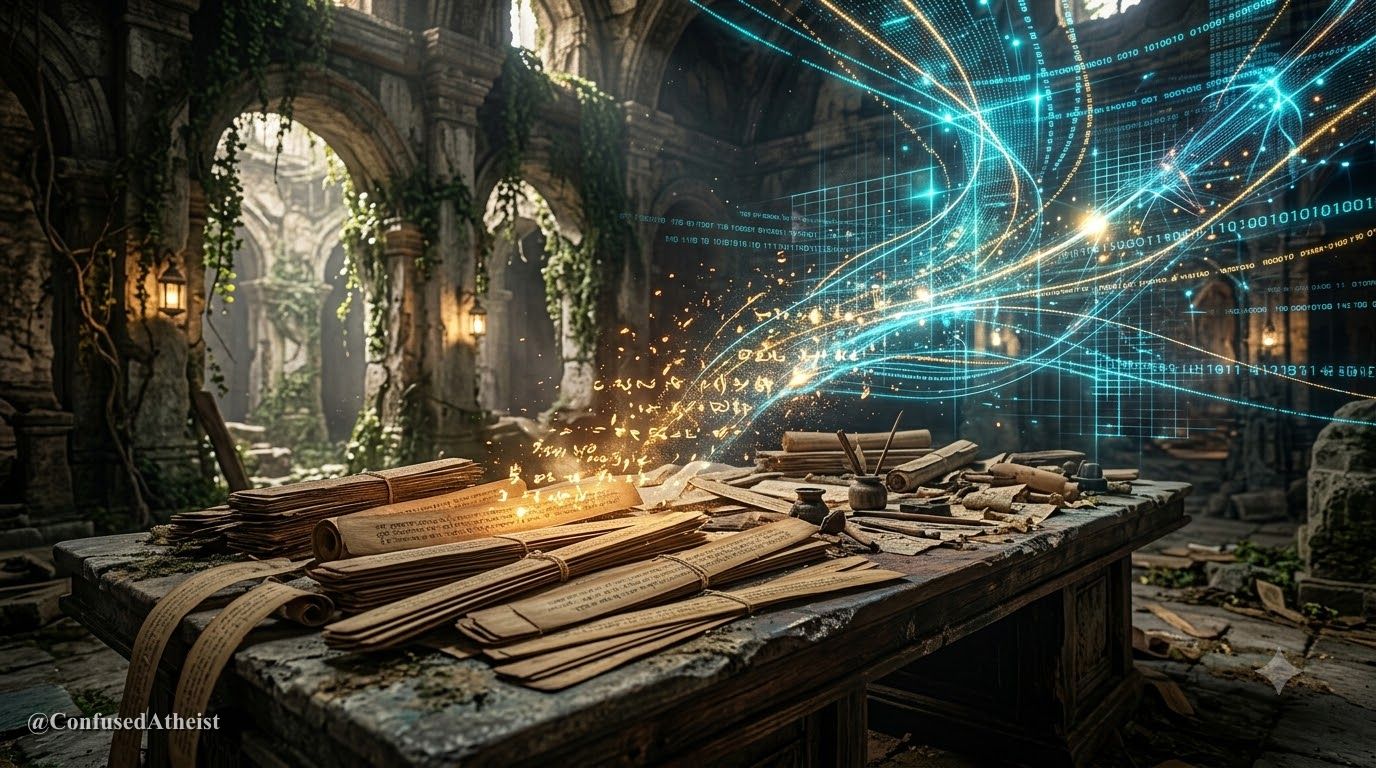
We have officially arrived at the golden zenith of human informational efficiency: an era in which nobody needs to read anything ever again.
Scan the browser window of any knowledge worker or ambitious student today, and you will discover a quiet technological miracle. A four-hundred-page treatise on geopolitical economics, a dense philosophical inquiry into consciousness, or an exhaustive historical biography can now be processed in seven hundred milliseconds.
You highlight the URL. You tap a keyboard shortcut or summon an artificial intelligence sidekick, and you issue the defining prayer of the modern intellectual age:
“Give me the five key takeaways in bullet points. Keep it under one hundred words. Explain like I’m in middle management.”
Like magic, the machine complies. The author's five years of agonizing archival research, stylistic revisions, and structural nuance are instantly reduced to five neat, sanitized bullet points decorated with emojis:
- 📌 Systemic fragility stems from misaligned institutional incentives.
- 💡 Adaptability beats rigid planning in uncertain operating environments.
- 🚀 Leverage feedback loops to optimize personal productivity.
The user skims the bullet points in twenty-two seconds, nods with the serene satisfaction of someone who has successfully consumed an entire library before their morning coffee has gone cold, and closes the tab.
Mission accomplished. Wisdom downloaded. Zero clicks expended.
The Illusion of Synthetic Mastery
The triumph of the automated summary represents a subtle, profound shift in how human civilization understands the nature of knowledge.
We have conflated data retrieval with understanding.
A summary can deliver the conclusions of a book, but conclusions are the cheapest part of any intellectual endeavor. If you simply wanted the conclusion of War and Peace, it can be stated in four words: war is terrible; peace is fleeting. If you wanted the takeaway from the Bhagavad Gita, you could condense it into: fulfill your ethical duty without emotional attachment to outcomes.
Yet nobody reads literature merely to obtain the answer key at the back of the textbook.
The transformative power of a profound text lies entirely in the friction of the journey:
- The slow, arduous development of a counter-intuitive premise.
- The intellectual tension of encountering ideas that challenge your moral instincts.
- The author’s cadence, tone, and rhetorical hesitation as they wrestle with their own doubts.
When an algorithmic model summarizes a complex text, it strips away the very qualities that make human thought memorable: ambiguity, paradox, voice, and struggle. It flattens Mount Everest into an airport travel brochure.
You walk away with the smug vocabulary of an expert without having performed a single calorie of actual cognitive labor. You have not digested an idea; you have merely ingested an algorithmic paste.
The Death of Svadhyaya
Ancient traditions were acutely conscious of this danger long before the invention of neural networks.
In classical Indian philosophy, the practice of Svadhyaya—the dedicated, solitary study and contemplation of sacred and philosophical texts—was considered an indispensable spiritual discipline. Crucially, Svadhyaya was never defined as speed-reading or information gathering. It was an intentional, slow meditation on language itself.
The student was expected to sit with a single verse for days, chanting it, interrogating its grammatical subtleties, and allowing its contradictions to ferment within consciousness. The understanding (Jnana) did not reside in the text like an apple waiting to be plucked; it emerged through the friction between the text and the meditating mind.
In the Western tradition, Socrates expressed a shockingly identical anxiety in Plato’s Phaedrus. When recounting the myth of the god Theuth, who invented writing, Socrates warned that writing would produce not true wisdom, but the reputation of wisdom: people would read many things without proper instruction and believe themselves knowledgeable, when in fact they were ignorant and difficult to talk to, filled with the conceit of wisdom rather than wisdom itself.
If Socrates was alarmed by the static written word on papyrus, imagine what he would say about an AI assistant that pre-chews a text and regurgitates it into three bullet points so that an executive never has to look at the original sentences at all.
The Feedback Loop of Confident Shallowness
The ultimate comedy of this summary-saturated culture is that it creates an infinite feedback loop of borrowed thoughts.
Authors now write non-fiction books that are deliberately bloated to three hundred pages—knowing that their editor requires book-length packaging—while secretly structuring every chapter to ensure that an AI crawler extracts the exact soundbites they need for social media carousels.
Meanwhile, readers consume the AI summary of the book, tweet the bullet points to their professional followers, and engage in high-decibel online debates about ideas neither party has actually read with their own eyes.
We are rapidly building an intellectual landscape composed entirely of shadows quoting shadows.
Perhaps the most radical act of rebellion remaining in contemporary intellectual life is delightfully simple: close the summarizer, turn off the notifications, pick up a heavy, difficult book, and allow yourself the ancient luxury of reading a sentence that requires you to stop, stare out the window, and actually think.